
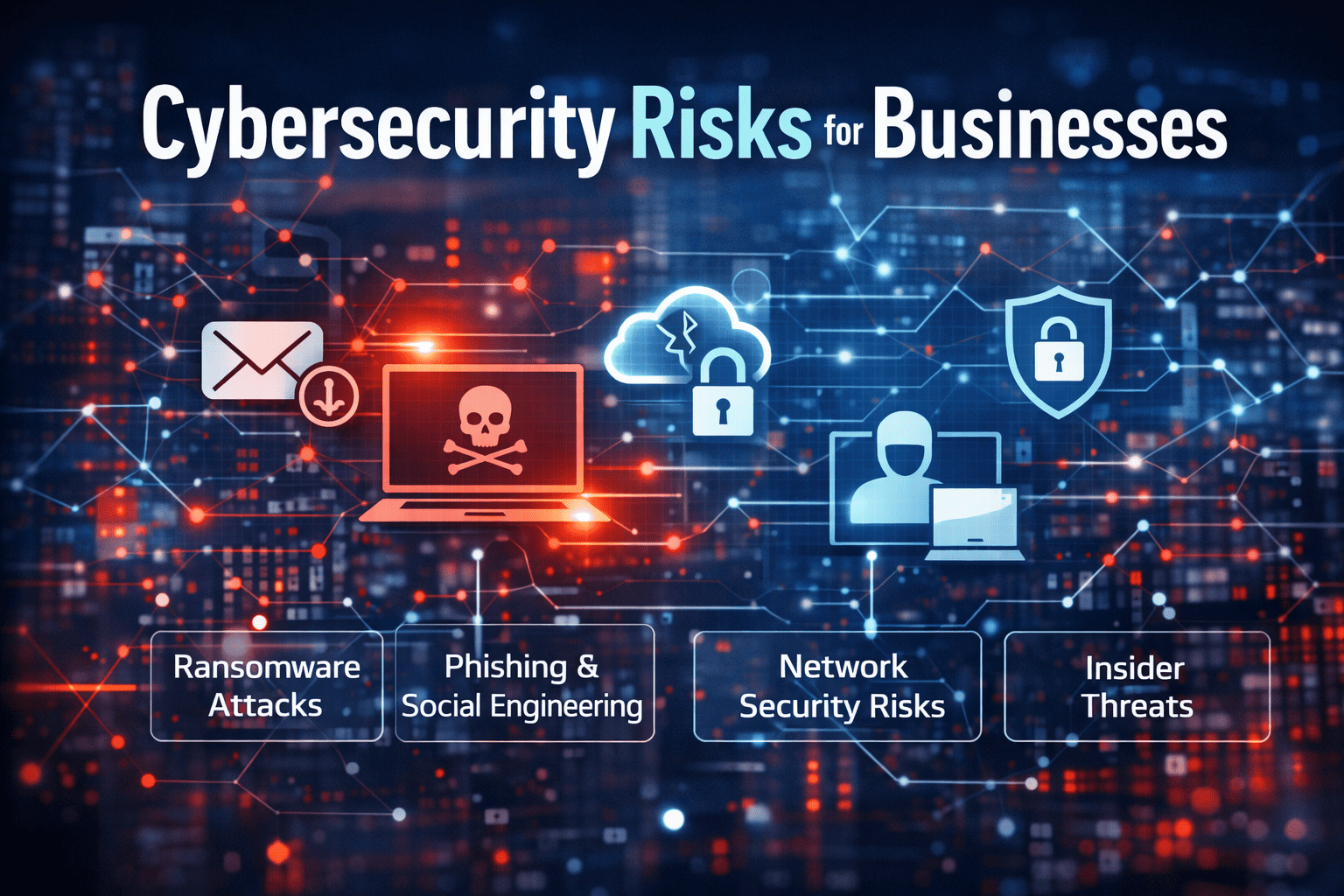
Cybersecurity is no longer just an IT issue. It is a business risk that impacts operations, reputation, compliance, and long term growth.
As technology adoption accelerates and businesses rely more heavily on cloud platforms, remote work systems, and digital infrastructure, cyber threats continue to grow in complexity and frequency.
Organizations across industries including manufacturing, healthcare, legal services, and professional firms must treat cybersecurity as a core business priority.
For companies operating in competitive markets such as Detroit and throughout Michigan, protecting digital assets is essential for stability and growth.
Why Cybersecurity Is a Business Level Concern
Modern businesses depend on:
- Cloud infrastructure
- Network connectivity
- Remote workforce access
- Customer data storage
- Online transactions
- Third party software platforms
Every digital touchpoint introduces potential vulnerability.
In 2026, cybercriminals are increasingly targeting small and mid sized businesses because they often lack structured security frameworks.
Proactive cybersecurity planning reduces risk and strengthens business resilience.
1. Ransomware Attacks
Ransomware remains one of the most damaging cyber threats facing businesses.
Attackers encrypt company data and demand payment for restoration. Even if data is recovered, businesses often experience:
- Extended downtime
- Financial loss
- Reputation damage
- Regulatory penalties
Ransomware often enters through phishing emails, compromised credentials, or unsecured networks.
Prevention strategies include:
- Advanced email filtering
- Endpoint protection
- Network segmentation
- Regular security monitoring
- Secure backup systems
Businesses with managed IT and structured network design significantly reduce ransomware exposure.
2. Phishing and Social Engineering
Phishing attacks continue to evolve. Cybercriminals impersonate executives, vendors, or trusted contacts to trick employees into revealing sensitive information.
Common targets include:
- Login credentials
- Financial data
- Customer information
- Payment approvals
Even well trained employees can fall victim without proper safeguards.
Effective protection requires:
- Multi factor authentication
- Employee security training
- Email filtering systems
- Role based access control
Cybersecurity is not only technical. It involves human awareness and policy enforcement.
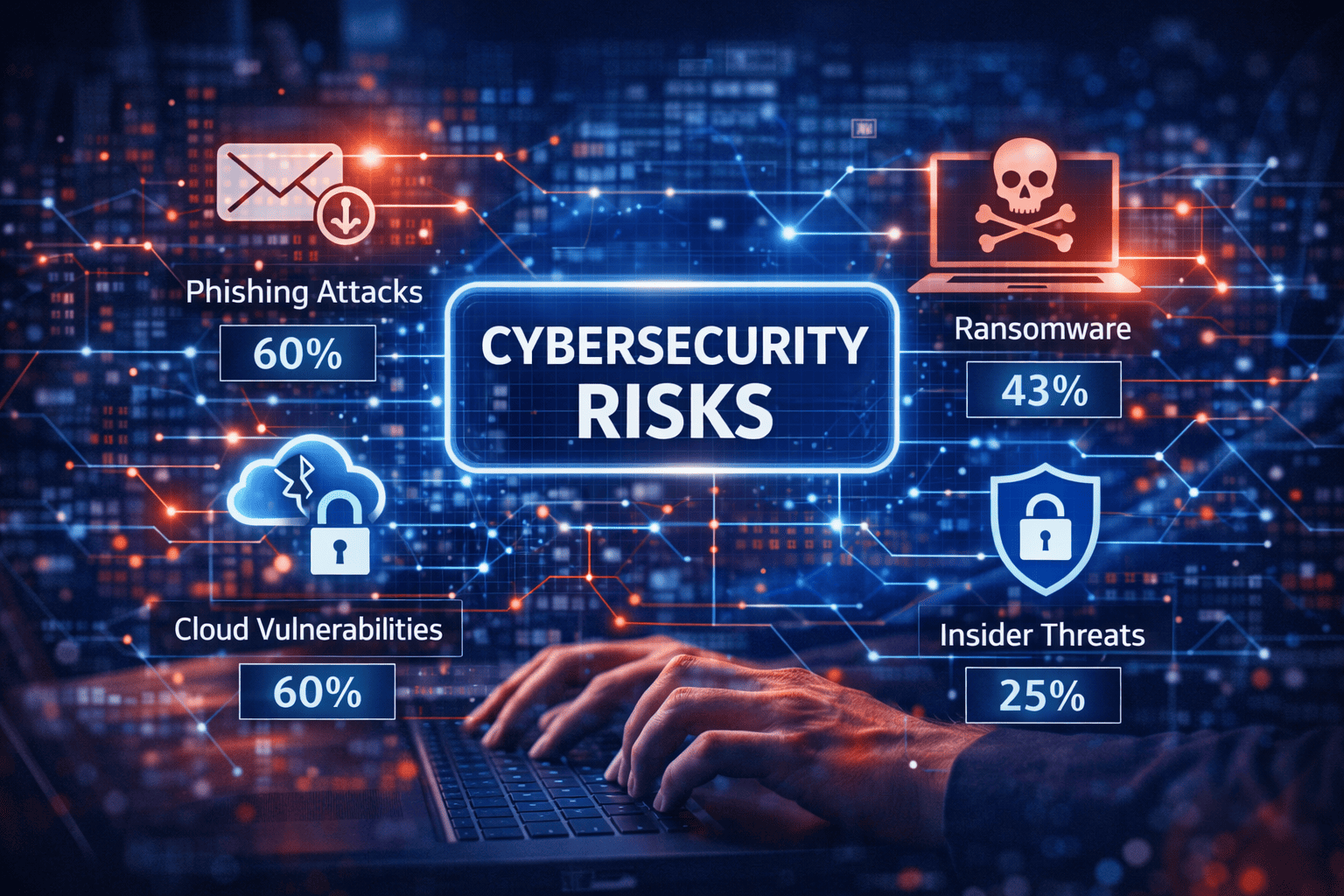
3. Weak Network Security
Poor network architecture is one of the most common vulnerabilities in businesses.
Risks include:
- Misconfigured firewalls
- Unsecured wireless networks
- Lack of network segmentation
- Outdated routers and switches
- Excessive user access privileges
Professional network design integrates cybersecurity into infrastructure planning.
Companies across Detroit that invest in secure network architecture reduce breach risk and improve operational stability.
4. Cloud Misconfiguration
Cloud adoption continues to increase, but many businesses fail to configure security settings properly.
Common cloud vulnerabilities include:
- Publicly exposed storage
- Weak identity management
- Improper permission settings
- Lack of monitoring
Cloud platforms are secure when configured correctly. However, mismanagement can create significant risk.
Professional cloud infrastructure management ensures:
- Secure access control
- Continuous monitoring
- Data encryption
- Compliance alignment
Business Survival Threat
5. Insider Threats
Not all cybersecurity threats originate externally.
Insider risks include:
- Disgruntled employees
- Negligent staff
- Accidental data sharing
- Unauthorized downloads
Structured access control policies and monitoring systems reduce insider risk significantly.
Businesses should implement:
- Least privilege access
- Audit logging
- Role based permissions
- Clear data handling policies
6. Lack of Backup and Disaster Recovery
Many businesses assume their data is safe until an incident occurs.
Without structured backup systems, data loss can lead to permanent business disruption.
A strong disaster recovery plan includes:
- Automated backups
- Off site storage
- Cloud replication
- Recovery testing
- Clear response procedures
Organizations that prepare in advance recover faster and reduce financial impact.
Don’t Wait for a Breach. Secure Your Business Today.
Signs Your Business May Be at Risk
You should evaluate your cybersecurity strategy if:
- You rely heavily on email communication
- Employees work remotely
- You use multiple cloud platforms
- Your network has grown without structured planning
- You have not conducted a recent security audit
- Backup systems have not been tested
Ignoring these warning signs increases exposure to costly disruptions.
Building a Strong Cybersecurity Strategy
An effective security framework combines:
- Network design
- Cloud security configuration
- Endpoint protection
- Employee training
- Access control management
- Continuous monitoring
- Disaster recovery planning
Cybersecurity is not a one time installation. It requires ongoing evaluation and improvement.
Businesses across Michigan that treat cybersecurity as a strategic priority maintain stronger operational resilience.
Frequently Asked Questions
Why are small businesses targeted by cybercriminals
Is cloud infrastructure secure
How often should cybersecurity systems be reviewed
Does network design improve cybersecurity
Conclusion
Cybersecurity threats continue to evolve as technology advances. Businesses must treat security as a foundational component of operations, not a reactive afterthought.
Ransomware, phishing, weak network architecture, and cloud misconfiguration present serious risks. However, structured planning and proactive management significantly reduce exposure.
Companies that invest in secure infrastructure, ongoing monitoring, and employee awareness position themselves for long term stability and growth.